









 Official Step2 Distributor
 Quick Dispatch (within 24h)
 30 Days Money Back Guarantee
 3 Year Warranty
-
Filter By Category
- Art Desks and Easels (2)
- Art Easels for Kids (2)
-
Filter By Stock
- In Stock (2)
Filter By Brand
- Step2 (3)
Art and Visualisation
Art and visualisation together are about more than making marks on a page - they involve picturing something in your mind and then working out how to represent it. That mental step, imagining something before making it real, is a genuinely distinct skill from the physical act of drawing itself, and it's one that develops gradually through open-ended creative play.
A large, dedicated art surface - whether a vertical easel or a seated desk - gives a child room to work at a genuine scale rather than a small notebook page. Browse our art desk and easel range to see the options, including dry-erase and magnetic surfaces that add a low-stakes way to experiment, since nothing drawn or built is permanent. A two-sided easel adds a social dimension too, letting two children create side by side while still each working on their own idea.
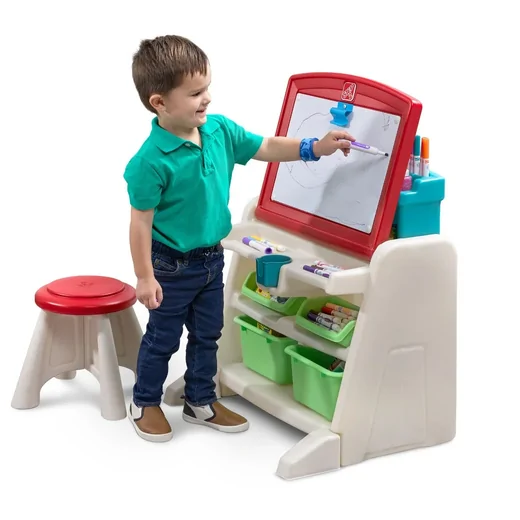
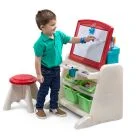
Flip and Doodle Easel Desk and Stool
https://www.step2direct.com.au/flip-doodle-easel-desk $219.00
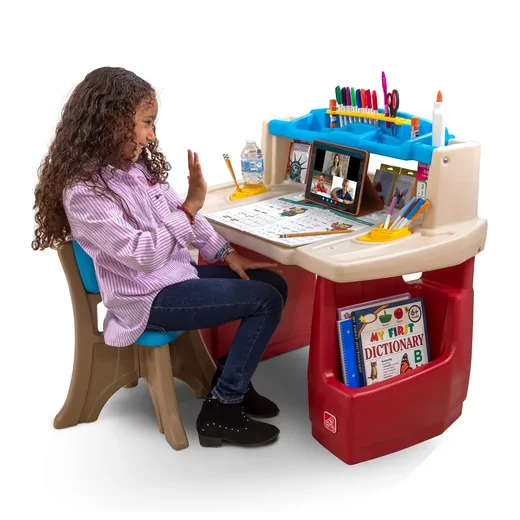
Deluxe Art Master Desk
https://www.step2direct.com.au/deluxe-art-master-desk $259.00
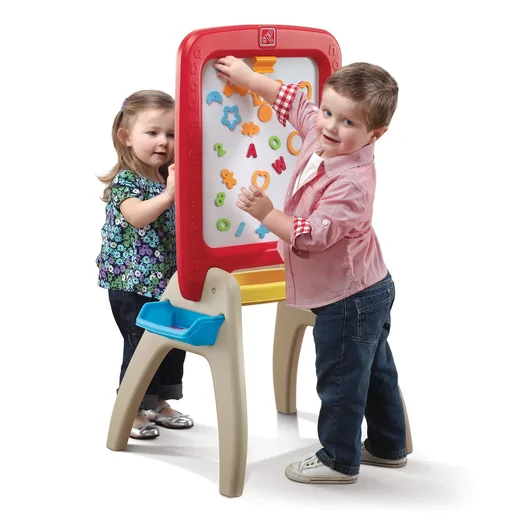
All Around Easel for Two - Red
https://www.step2direct.com.au/all-around-easel-for-two-red $129.00
Art and visualisation in play
What visualisation adds to art
Art and visualisation together are about more than making marks on a page - they involve picturing something in your mind and then working out how to represent it, whether that's a drawing, a magnet design, or a written word. That mental step, imagining something before making it real, is a genuinely distinct skill from the physical act of drawing itself.
Why open-ended art matters
Unlike colouring inside pre-drawn lines, open-ended drawing and creating asks a child to decide what to make, not just how to make it. That decision-making - what does this need to look like, what am I trying to show - builds visual-spatial thinking and planning in a way that more structured, instruction-led activities don't.
Which kinds of play build it
A large, dedicated art surface - whether a vertical easel or a seated desk - gives a child room to work at a genuine scale rather than a small notebook page, which matters for bigger, more expressive mark-making. Dry-erase and magnetic surfaces add a low-stakes way to experiment, since nothing drawn or built is permanent, encouraging more attempts and revisions than a page that can't be erased. A two-sided easel adds a social dimension too, letting two children create side by side while still each working on their own idea.
Encouraging the process, not just the result
The value in art at this age is mostly in the process - deciding, attempting, revising - rather than the finished picture. Asking a child to describe what they've made or what they're planning to make tends to build more genuine visualisation skill than praising the end result alone, since it asks them to put the mental picture into words as well as onto the page.
Frequently asked questions
Does my child need to be "good at drawing" for this to matter?
No - the developmental value is in the planning and representing process, not artistic skill. A scribble that represents something specific to your child is doing the same cognitive work as a more polished drawing.
What's the benefit of a dry-erase or magnetic surface over paper?
A reusable surface removes the pressure of a "final" result, which tends to encourage more experimentation and revision - a child is more likely to try something new if getting it wrong doesn't waste paper or feel permanent.
At what age does visualisation in art start developing?
Even very early mark-making, well before recognisable drawings appear, involves a child forming an intention and acting on it - visualisation develops gradually alongside fine motor control, often from the toddler years onward.